We design, install, and service complete security systems for Michigan municipal and government facilities — access control, surveillance, alarms, and intercom for city and township buildings, public-safety facilities, and utilities. Built for public accountability, installed by our own licensed technicians, never subcontractors.
Public facilities carry a double obligation most businesses don't: they have to stay open to residents while protecting staff, records, and sensitive areas — and they have to do it under public procurement rules. Section 889 of the NDAA restricts certain foreign-made surveillance equipment in publicly funded projects, so equipment choice is a procurement question, not just a technical one. Designing to those requirements from the start is what keeps a project both compliant and fundable.
A public building has to serve the public and stay secure at the same time. Residents come in for services, meetings are open to the public, and staff and sensitive areas still need protection — all under budgets and procurement rules that demand accountability. That balance is what makes municipal security its own discipline. The system has to control access to restricted areas without blocking public access to open ones, cover public spaces and entrances, and produce records that hold up to public-records and audit expectations.
Government facilities also operate under real procurement accountability. Public projects increasingly require NDAA-compliant equipment, restricted areas like records, IT, and evidence storage need controlled and logged access, and public-safety and utility facilities have their own heightened requirements. Aging keys, spotty coverage, and no audit trail don't meet that bar — and it's exactly what we replace. We're an established vendor to Michigan municipalities and public agencies, and we design every system around how your facility actually serves the public.
Because our own licensed technicians handle every installation start to finish — never subcontractors — there's one accountable, background-checked team in your facility. We've installed for townships, municipal buildings, public-safety facilities, and public agencies across Michigan, and we design each system to grow with the agency instead of locking you into one vendor's closed platform.
Every agency and municipality we work with is wrestling with some version of these. Here's how we address each one.
Access control keeps restricted areas locked while public areas stay open — protecting staff and sensitive spaces without turning a public building into a checkpoint.
Restricted, logged access to records rooms, IT, and evidence storage limits entry to authorized personnel and creates the audit trail public accountability requires.
AI cameras cover lobbies, meeting rooms, entrances, parking, and grounds — giving staff eyes on public areas and clear footage when incidents occur.
NDAA-compliant equipment meets the requirements that come with public procurement and grant-funded projects.
Public-safety facilities and utilities get the heightened access control, monitoring, and coverage their higher-security requirements demand.
Intrusion alarms and 24/7 monitoring protect empty public buildings, equipment, and records after hours.
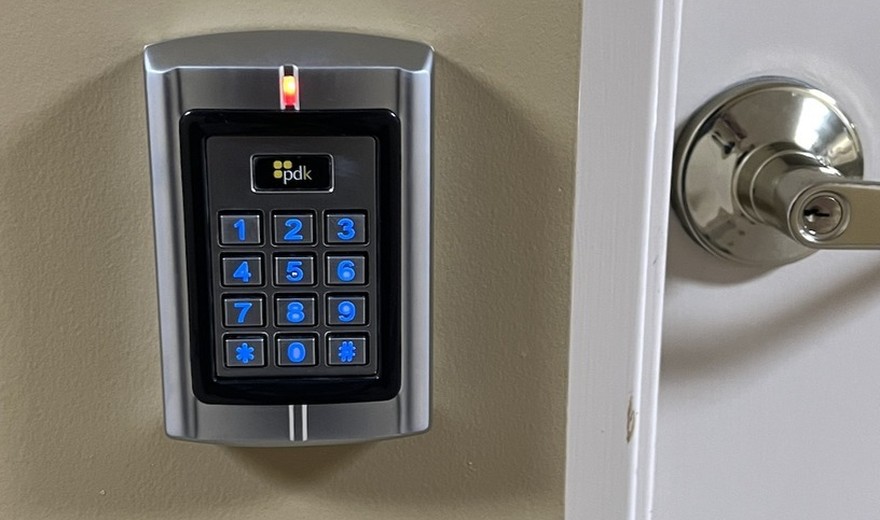
Restricted entry to records, IT, and evidence storage, badge and mobile credentials, and full door-event logging.
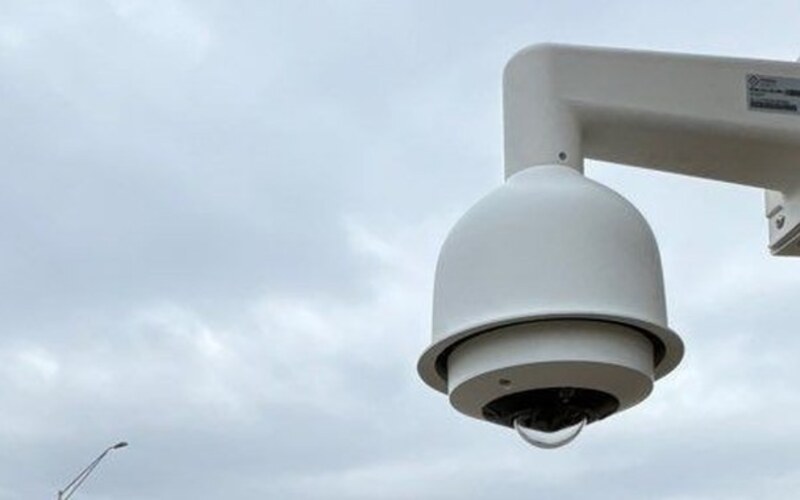
Coverage of lobbies, meeting rooms, entrances, and grounds, with analytics and evidence-grade footage.
Intrusion detection and 24/7 monitoring for after-hours protection of public buildings and records.
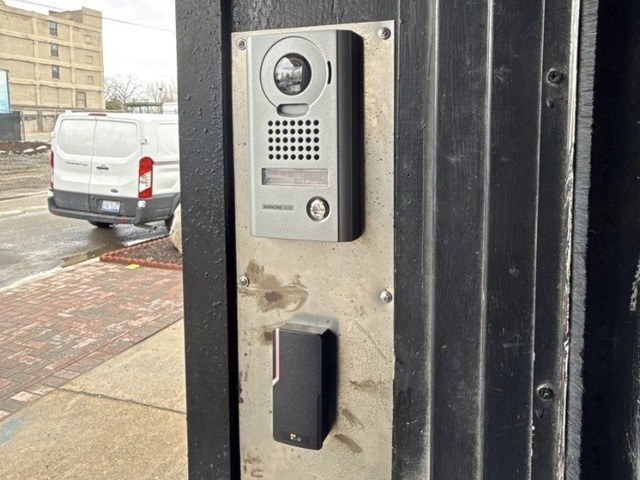
Video buzz-in at controlled entrances plus paging for announcements and emergency communication.
We design government systems to meet public-sector requirements — NDAA-compliant equipment suitable for procurement and grant-funded projects, restricted and logged access to sensitive areas, and retention that supports public-records and audit expectations. We're an established, licensed vendor to Michigan municipalities and public agencies.
We're glad to work within your procurement process and alongside facilities, IT, and public-safety staff, and to phase a rollout so it fits budget cycles. The goal is a system that meets requirements, serves the public, and stands up to review — not equipment nobody was trained on.
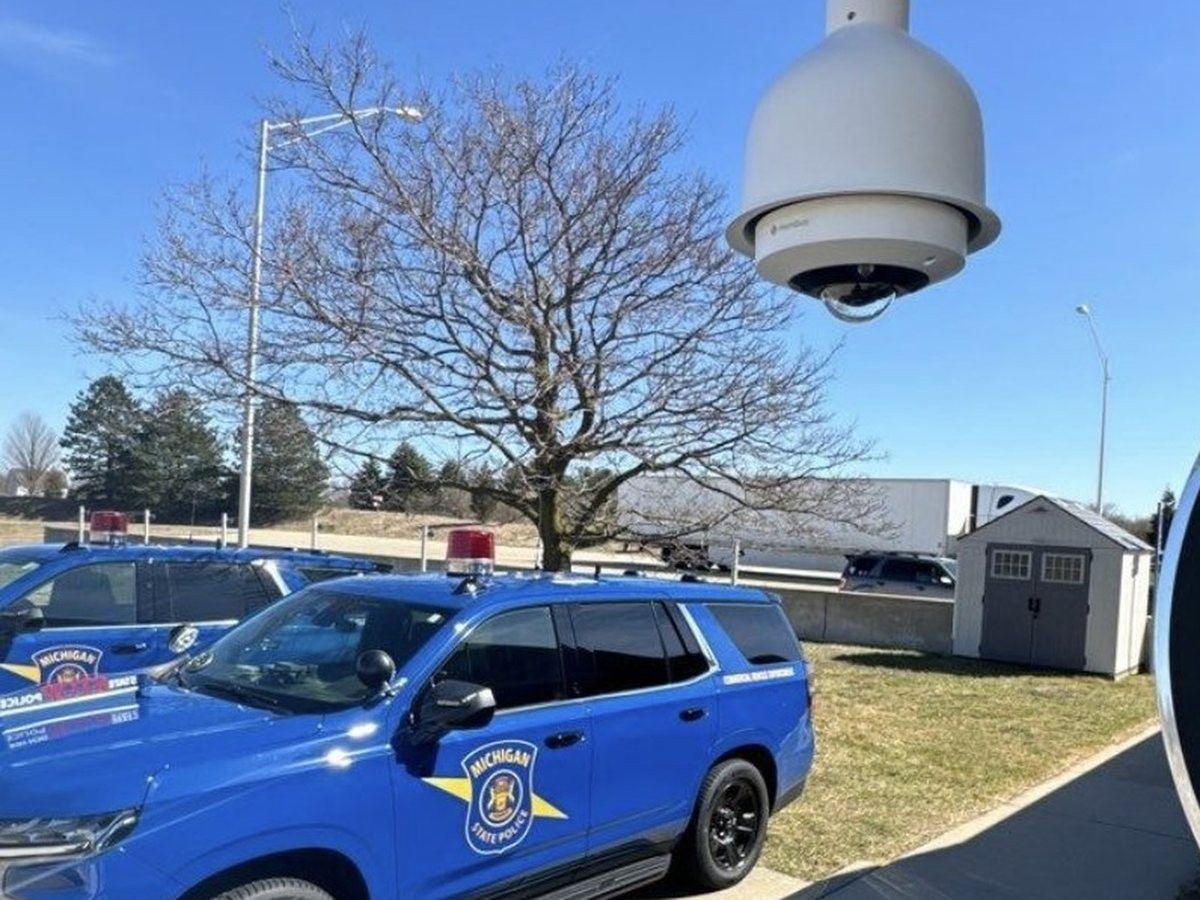
We have installed for the Michigan State Police at posts across the state, for the State of Michigan across fifteen buildings, and for a long list of Michigan municipalities — New Baltimore, Shelby Township, Ira Township, Bruce Township, Romeo. Public sector work runs on rules that do not exist anywhere else, and an integrator who has not done it will learn them on your project, at your expense.
Section 889 of the National Defense Authorization Act prohibits federal agencies, and entities using federal funds, from procuring video surveillance and telecommunications equipment from specified Chinese manufacturers and their subsidiaries. The Trade Agreements Act separately requires that products come from the U.S. or designated countries.
The trap is rebadging. A significant amount of camera hardware sold under American and Korean brand names is manufactured by the exact companies Section 889 names, and the spec sheet will not say so. We have seen agencies discover this during an audit, years after install, with no clean remediation path short of replacement.
We spec NDAA- and TAA-compliant equipment on public sector work by default, and we document the compliance chain so it exists in your file rather than in our memory. If your funding is federal, or might be federal later, that documentation is the deliverable that matters most.
This is the part that surprises new municipal clients. Video from a public building can be subject to FOIA. That means retrieval has to be practical, redaction has to be possible, and retention has to be a written policy rather than whatever the recorder happened to be set to.
A system that cannot export a specific clip, in a usable format, with unrelated individuals obscured, turns every FOIA request into a staff crisis. We design for that workflow specifically — and if your clerk cannot do it without calling us, we built it wrong.
Public work means bid specs, board approval cycles, prevailing wage where applicable, and a paper trail on every line. An RFP written by someone without integration experience frequently specifies a system that cannot actually be built as described — and the bidders who notice either no-bid or price the ambiguity.
We write bid-ready specifications for Michigan agencies, and we have sat on the other side of enough evaluations to know what a defensible award file needs. If you are drafting an RFP, talk to us before it goes out rather than after the responses come back incoherent.
A police post, a fire station, and a DPW yard have almost nothing in common operationally. The post needs evidence-grade coverage, secured evidence storage, and holding-area monitoring that can withstand a defense attorney. The fire station needs bay doors and apparatus, and it needs them to work at 3 a.m. with nobody in the building. The DPW yard needs perimeter coverage on equipment worth more than the building.
These are 24/7 mission-critical facilities where "we will come back Tuesday" is not a service model. It is one of the reasons we do not subcontract — when a post calls, the person who answers knows their building.
Background-checked employees in your facility — never subcontractors. One accountable team from design through service.
Local, licensed, and an established vendor to Michigan municipalities and public agencies, with a 4.9 Google rating.
Open, expandable platforms you can add to as needs and budgets allow — no rip-and-replace, no single-vendor lock-in.
Yes. We use NDAA-compliant equipment appropriate for public procurement and grant-funded projects, and we're an established vendor to Michigan municipalities.
Yes. We design access control that keeps records, IT, and evidence storage restricted while public lobbies and meeting rooms stay accessible — without turning the building into a checkpoint.
Yes. We're glad to work within your procurement rules and budget cycles and to phase installations accordingly.
Never. Every installation is handled by our own licensed, background-checked W-2 technicians — one accountable team from start to finish.
Yes — we serve townships, municipal buildings, public-safety facilities, and public agencies throughout Michigan, plus Ohio and Indiana. Call 586-466-4490 for a free assessment.
Get a free, no-pressure facility security assessment anywhere in Michigan. We'll walk your building and design a system that meets procurement requirements and serves the public.
Headquartered in Macomb County with offices in Wixom and Milford — we respond fast across all of Metro Detroit and Michigan.
A Macomb County public facility needed a single secured point of entry and lockdown-ready access control. See the system we designed — the challenge, the solution, and the result.
Read the Case Study →