We design, install, and service complete security systems for Michigan hospitals, clinics, medical offices, and senior-living facilities — controlled access to pharmacies and records, patient-safe camera coverage, alarms, and intercom. Built for patient safety and privacy, installed by our own licensed technicians, never subcontractors.
Healthcare is one of the few environments where security is inseparable from federal privacy law. Under HIPAA, protected health information has to be safeguarded — which shapes not just your records systems but where a camera can point and who can open a door. A security system that ignores that isn't just incomplete; it can create its own compliance exposure. That's why healthcare security has to be designed around privacy and access from the first walk-through, not bolted on afterward.
A medical facility carries risks a typical business never faces. You're protecting vulnerable patients, controlled substances, expensive equipment, and some of the most sensitive personal records that exist — all inside a building that has to stay open and accessible around the clock. That combination is what makes healthcare security its own discipline. The system has to lock down pharmacies and record rooms without slowing clinical staff, keep patients and infants safe, and produce clear documentation when an incident needs review — all while respecting patient privacy at every camera.
Healthcare also operates under real accountability. Camera placement has to be planned around patient-privacy expectations and HIPAA-sensitive areas, access to controlled-substance storage has to be restricted and logged, and after-hours entry to an emergency department has to be controlled without ever blocking care. Aging keys and blind-spot cameras don't meet that bar — and it's exactly what we replace. We design every healthcare system around how your facility actually runs: shift changes, patient flow, deliveries, visitor hours, and the reality that clinical staff need doors that are both secure and effortless.
Because our own licensed technicians handle every installation start to finish — never subcontractors — there's one accountable, background-checked team in your facility, which matters when the work happens around patients and protected information. We've installed for medical offices, urgent care, clinics, and senior-living communities across Michigan, and we design each system to grow with the organization instead of locking you into one vendor's closed platform.
Every medical facility we work with is wrestling with some version of these. Here's how we address each one.
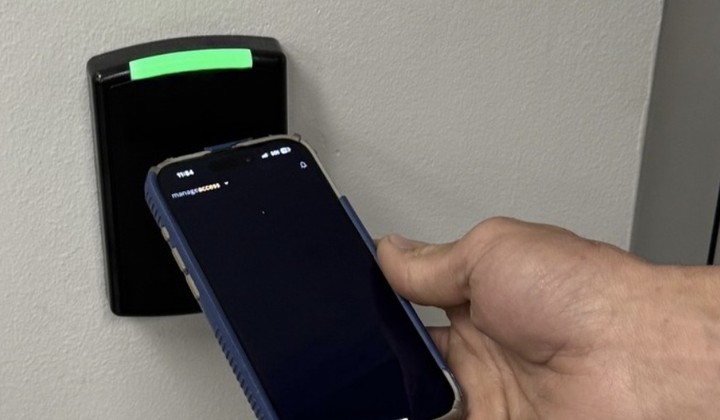
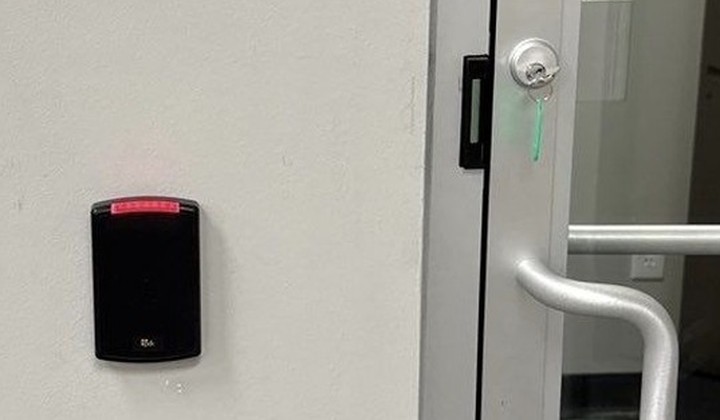
Restricted access control on pharmacies, med rooms, and controlled-substance storage limits entry to authorized staff and logs every door event to a person and a time — supporting both security and compliance.
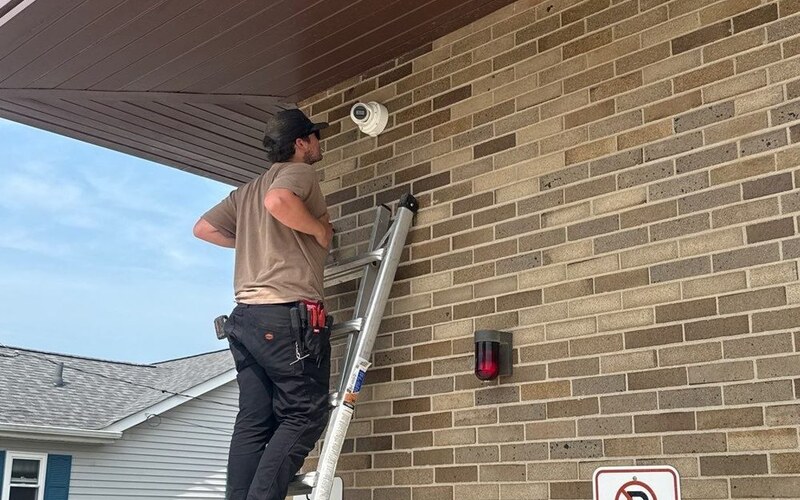
AI-driven cameras in hallways, waiting rooms, parking structures, and entrances give staff eyes on common areas and clear footage to resolve incidents — placed to respect patient privacy in sensitive areas.
Access control on records rooms, IT closets, and server areas protects the most sensitive information in the building and creates an audit trail of exactly who entered and when.
Emergency departments and clinics need controlled access that never blocks care. Scheduled locking and credentialed entry keep the building secure while letting authorized staff move freely.
Integrated systems can support infant-protection and patient-wandering solutions in maternity and memory-care settings, tying alarms and door control together for at-risk patients.
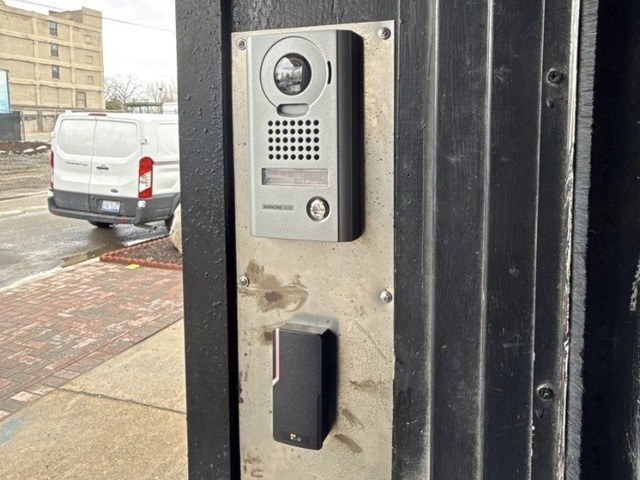
Video intercom at controlled entrances lets staff see and speak with every visitor before releasing the door — keeping the rest of the facility secure during and after hours.
Restricted entry to pharmacies, records, and med rooms, badge and mobile credentials, and full door-event logging for compliance.
Privacy-aware coverage of entrances, hallways, waiting areas, and parking, with analytics and evidence-grade footage.
Video buzz-in at controlled entrances plus facility-wide paging for codes, announcements, and emergency communication.
Intrusion detection and 24/7 monitoring for after-hours protection of labs, pharmacies, and equipment.
We design healthcare systems with patient privacy front of mind — planning camera placement to avoid HIPAA-sensitive areas while still covering the spaces that matter, and restricting and logging access to pharmacies, records, and controlled-substance storage. We use NDAA-compliant equipment suitable for facilities that answer to accreditation and regulatory review.
We're glad to work alongside your facilities team, compliance officer, and IT department, and to phase a rollout department-by-department so it fits your operations and budget. The goal is a system that supports compliance, protects patients, and actually gets used — not equipment nobody was trained on.
Healthcare is the one vertical where the hard part of the design is deciding what not to cover. Every other industry we serve wants more coverage. A well-designed clinic or hospital deliberately has blind spots, and knowing where to put them is the job.
Video that captures a patient, a chart on a screen, or a conversation at an intake window can constitute protected health information. That does not mean you cannot have cameras in a medical facility — it means where they point, what they record, who can retrieve the footage, and how long it lives all become decisions with compliance weight.
Practically: hallways and entrances yes; exam rooms no; waiting areas with care, and never with audio. Reception is a judgment call that depends on what is visible on the monitor behind the desk. We walk this with your compliance lead rather than guessing, because the person who owns the risk should own the decision.
Access to footage matters as much as capture. A system where any front-desk employee can scrub through video is a system where PHI walks. Role-based access, an audit log of who pulled what, and a defined retention period are what turn a camera system from a liability into a documented control.
Medication storage, medical records, and the server room. Nearly every healthcare access control project we do starts at those three and expands outward. They are small, the audit requirement is real, and the credential trail answers questions that otherwise turn into he-said-she-said.
Controlled substances raise the bar further — a cabinet or vault with its own credential, its own log, and camera coverage that captures the access without capturing the patient area behind it. That framing constraint is often the reason a camera ends up somewhere non-obvious.
The incidents that actually happen in Michigan medical facilities are workplace violence in the ED and behavioral health areas, infant security in maternity, elopement in memory care, staff parking lot safety on late shifts, and pharmacy diversion by staff. None of those are solved by a camera on the front door.
Duress buttons at reception and in exam rooms where a clinician may be alone with a patient. Wander management in memory care that ties a resident credential to a door. Well-lit parking with coverage that reaches the far row, because a nurse walking to her car at 11 p.m. is the vulnerability nobody quotes for.
A clinic can close on a Sunday. A hospital cannot close at all. Every install in a live clinical environment has to plan around infection control, patient movement, and the fact that a drill running during a procedure is not acceptable.
Our technicians are our own W-2 employees, background-checked, and briefed on the specific unit before they walk in. That matters more here than anywhere else we work — a subcontracted crew that has never been in a clinical setting does not know why they cannot prop that door, and by the time someone explains it, it has already been propped.
Background-checked employees in your facility — never subcontractors. One accountable team from design through service, trusted around patients and protected information.
Local, licensed, and accountable — with a 4.9 Google rating and real experience in medical offices, clinics, and senior-living communities.
Open, expandable platforms you can add to department-by-department — no rip-and-replace, no single-vendor lock-in.
Yes. We design access control that limits entry to authorized staff and logs every door event to a person and a time — supporting both security and compliance documentation.
Yes. We plan camera coverage to protect patient privacy in sensitive areas while still covering entrances, hallways, waiting rooms, and parking. We're glad to review placement with your compliance officer.
Never. Every installation is handled by our own licensed, background-checked W-2 technicians. That accountability matters most when the work happens around patients and protected information.
Yes. We can integrate infant-protection and patient-wandering solutions in maternity and memory-care settings, tying door control and alarms together for at-risk patients.
Yes — we serve medical offices, clinics, urgent care, and senior-living communities throughout Michigan, plus Ohio and Indiana. Call 586-466-4490 for a free assessment.
Get a free, no-pressure healthcare security assessment anywhere in Michigan. We'll walk your facility and design a system around patient safety, privacy, and your budget.
Headquartered in Macomb County with offices in Wixom and Milford — we respond fast across all of Metro Detroit and Michigan.
An Oakland County medical office needed controlled access to records and med storage without putting cameras where they do not belong. See the HIPAA-aware design we built — the challenge, the solution, and the result.
Read the Case Study →An Oakland County medical office needed controlled access to records and med storage. See the HIPAA-aware system we designed in under three weeks.
Read the Case Study →